
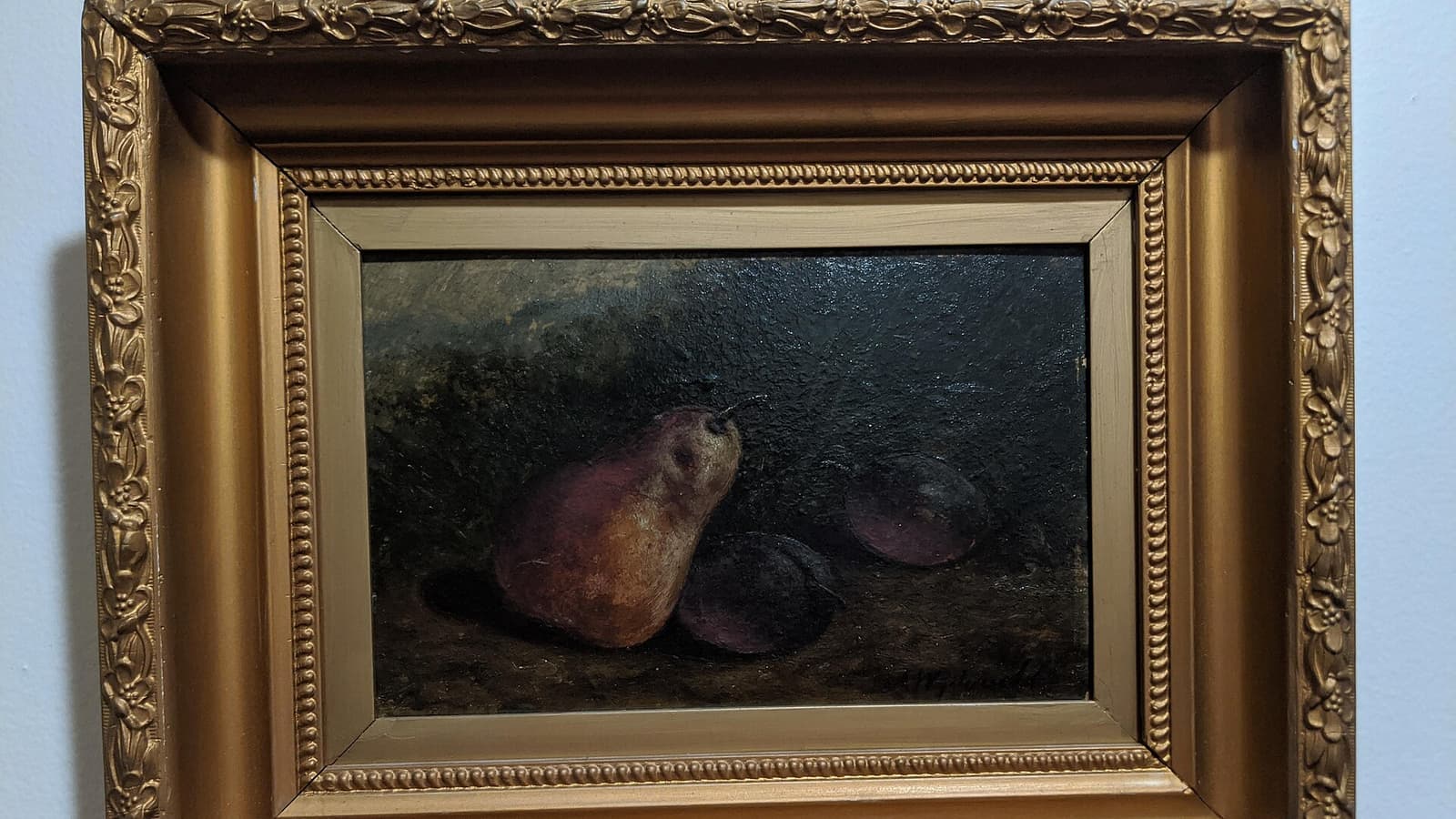
Reading A Painting: A Beginner’s Guide To Looking
A repeatable way to look at any work, from a museum masterpiece to a print above your sofa.
You do not need vocabulary to look at a painting well. You need a sequence: what is here, where is the light, and what is the artist asking me to feel. That is enough to see far more than most visitors do.
Start with the light
Find the brightest point and the darkest point. Artists place the strongest contrast where they want your attention first. Once you see that, the composition begins to make sense as a set of deliberate decisions rather than a single image.
Follow the lines
Look for the edges that lead the eye: a table edge, a glance, a road. Most paintings have a path the viewer is meant to travel, often circling back to a face or a hand. Following it tells you what the artist thought mattered.
Name the feeling before the meaning
Ask what the room feels like before you ask what it means. Colour temperature, spacing and scale do most of the emotional work. Interpretation built on that foundation tends to hold up; interpretation built on the wall label rarely does.
The short version
- Find the strongest light and dark
- Follow the lines the artist left you
- Notice the feeling before the meaning